
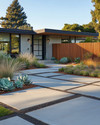
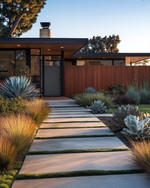
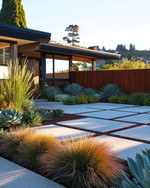
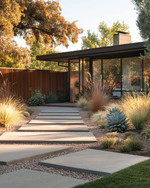
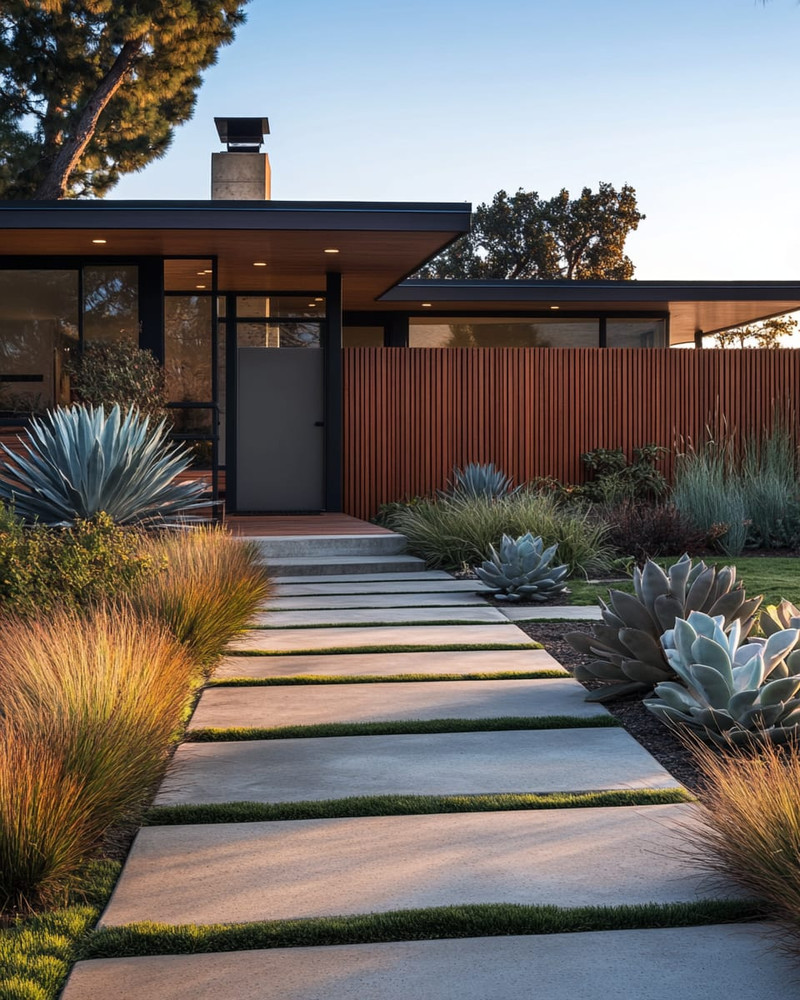
Mid-Century Modern Front Yard Retreat
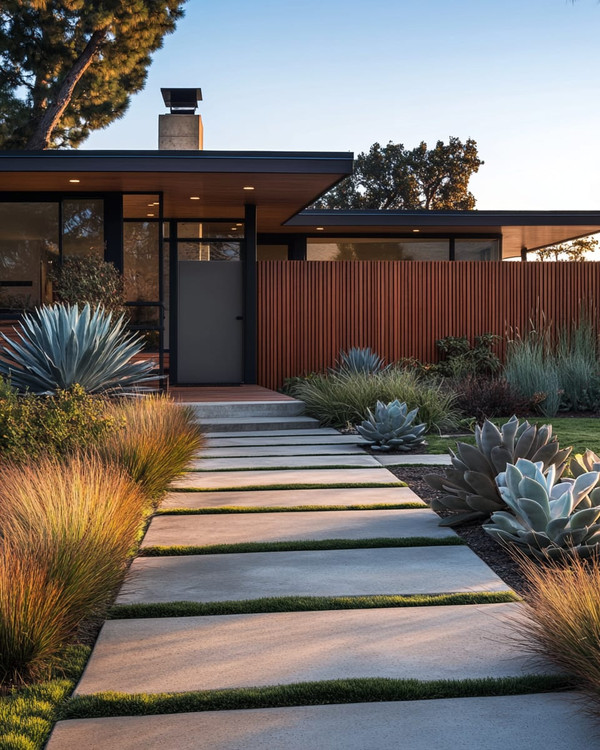
Transform your home's entryway into a Mid-Century Modern sanctuary, emphasizing the beauty of natural materials and rich textures. This approach elevates curb appeal by creating a cohesive, organic flow from the street to your front door, reflecting the era's appreciation for honest craftsmanship and connection to nature.
Thoughtful Hardscaping and Pathways
The foundation of a Mid-Century Modern front yard often begins with its hardscaping. Prioritize materials that are both durable and aesthetically aligned with the period's clean lines and natural ethos.
- Concrete Pavers: Opt for large, rectangular concrete pavers in a cool grey or warm cream, often laid with a slight gap for ground cover.
- Flagstone: Irregular flagstone in earthy tones like sandstone or slate creates an organic, meandering path that softens geometric architecture.
- Gravel: Pea gravel or crushed granite can define seating areas or pathways, offering a subtle textural contrast and a satisfying crunch underfoot.
Strategic Plantings and Greenery
Plants in a Mid-Century Modern front yard are not just decorative; they are architectural elements, chosen for their form, texture, and low-maintenance qualities, mirroring the natural world's inherent design.
- Succulents and Cacti: Agave, Yucca, and various cacti provide sculptural interest and thrive in sunny, dry conditions, often used in minimalist beds.
- Ornamental Grasses: Varieties like Dwarf Fountain Grass or Blue Fescue add movement and a soft, feathery texture, contrasting with hardscaping.
- Evergreen Shrubs: Low-growing Junipers or Dwarf Mugo Pines offer year-round structure and deep green hues, grounding the landscape.
- Native Plants: Integrating local flora helps the landscape feel established and reduces water consumption, aligning with sustainable design principles.
Authentic Materials and Finishes
The selection of outdoor finishes and materials is crucial for an authentic Mid-Century Modern aesthetic. Focus on raw, honest materials that age gracefully and add inherent texture.
- Redwood or Cedar: Use these woods for privacy screens, fencing, or planter boxes, valued for their natural resistance to elements and warm, inviting tones.
- Mid-Century Planters: Terracotta pots in classic shapes or fiberglass planters in muted tones like avocado green, mustard yellow, or burnt orange introduce period-appropriate accents.
- Stacked Stone: A low retaining wall or a feature wall clad in dry-stacked stone can add a rugged, natural texture that complements the smooth lines of the architecture.
Frequently Asked Questions
What kind of pathways work best for a Mid-Century Modern front yard?
Opt for clean-lined materials like large concrete pavers or natural flagstone with a subtle texture. Gravel can also be used to define secondary paths or seating areas, adding an organic feel.
Which plants are ideal for a Mid-Century Modern front yard?
Choose sculptural plants like agave, yucca, and various cacti. Ornamental grasses and low-growing evergreen shrubs also provide form and texture while requiring minimal upkeep.
How can I incorporate natural materials into my Mid-Century Modern front yard?
Utilize redwood or cedar for fencing and planter boxes. Terracotta or fiberglass planters in period-appropriate colors, along with stacked stone for retaining walls, will enhance the natural aesthetic.