
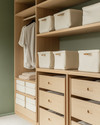
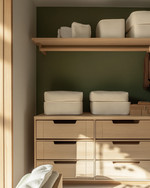
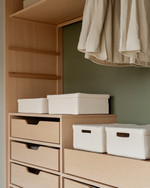
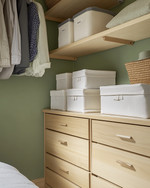
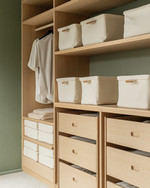
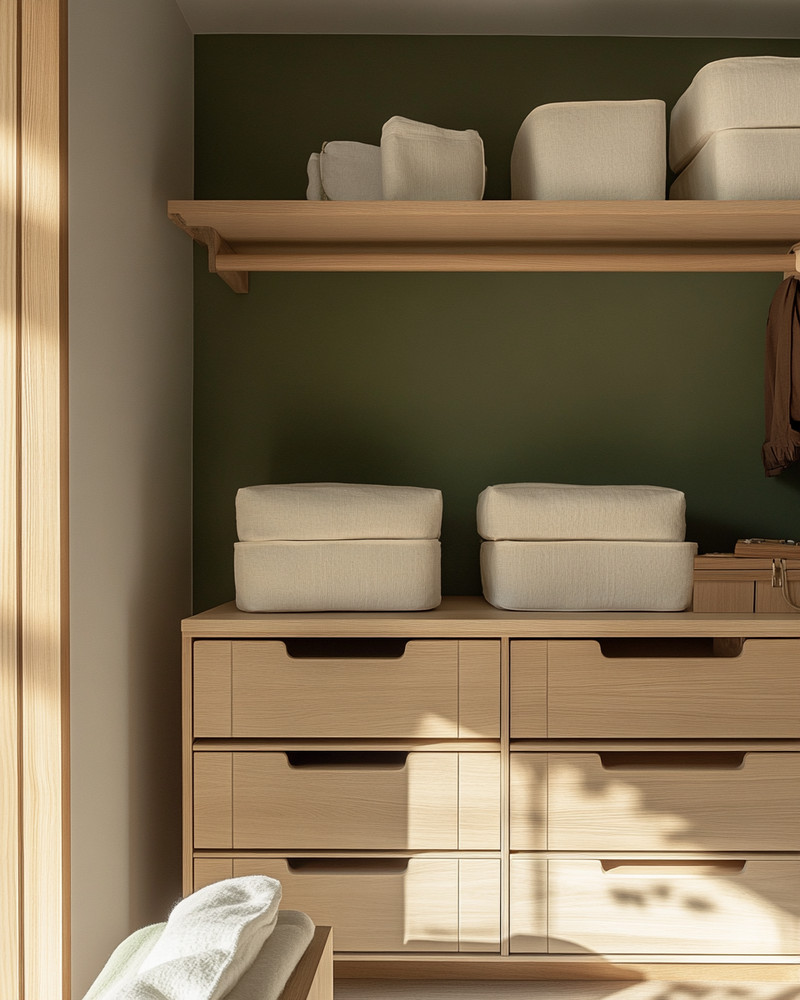
Japandi Closet Calm Storage
Creating a Japandi storage and closet space is about more than just organization; it's an exercise in cultivating a calm, cohesive color story. This design philosophy marries Japanese minimalism with Scandinavian warmth, resulting in serene spaces that prioritize function, natural beauty, and a deeply harmonious aesthetic. By carefully selecting a palette, you can transform utilitarian areas into extensions of your home's tranquil design.
Understated Color Palette
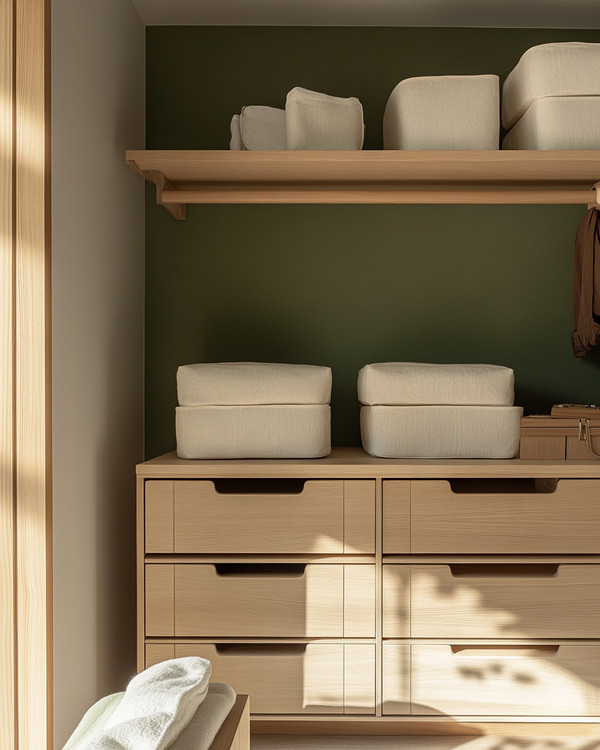
The foundation of a Japandi closet lies in a restrained, natural color palette that promotes tranquility and visual flow. Think muted tones inspired by nature.
- Warm Neutrals: Embrace shades like off-white (e.g., Farrow & Ball's 'Wimborne White'), soft greys (e.g., Benjamin Moore's 'Revere Pewter'), and light greiges.
- Earthy Tones: Incorporate subtle accents of clay, sage green, or a very muted terracotta for depth without overwhelming the space.
- Natural Wood Hues: Light, unfinished or lightly stained woods like ash, birch, or pale oak are central to the palette, providing warmth and texture.
Thoughtful Materiality
Beyond color, the materials chosen for storage solutions reinforce the Japandi aesthetic, offering tactile appeal and durability.
- Light Wood Joinery: Custom cabinetry and shelving in light oak or birch with clean lines and finger-pull details.
- Woven Elements: Baskets and storage boxes made from natural fibers like rattan, bamboo, or woven paper rope add texture and softness.
- Linen and Cotton: For garment bags, drawer organizers, or even subtle curtain panels, choose natural, undyed linen or organic cotton.
Seamless Integration & Organization
Japandi storage is inherently about thoughtful integration, ensuring every item has its place and the overall look remains uncluttered.
- Built-in Solutions: Opt for custom built-in closets and drawers that blend seamlessly into the wall, often without visible hardware.
- Open Shelving: Strategically placed open shelves, perhaps in a light ash, can display carefully curated items like folded sweaters or decorative boxes.
- Concealed Storage: Utilize sliding doors or flush-panel cabinet fronts to hide less aesthetic items, maintaining a clean visual plane.
Frequently Asked Questions
What colors define a Japandi storage space?
Japandi storage focuses on a calm, cohesive palette of warm neutrals like off-white and light grey, complemented by natural wood tones (ash, pale oak) and subtle earthy accents like clay or sage green.
Which materials are best for Japandi closet organization?
Prioritize natural materials such as light, unfinished woods like ash or birch for built-ins, woven rattan or bamboo for baskets, and natural linen or cotton for soft storage accessories.
How can I make my Japandi closet feel cohesive?
Achieve cohesion by sticking to a limited, natural color palette, using consistent light wood finishes throughout, and integrating thoughtful organization with a mix of concealed and neatly displayed storage.